

16 septiembre 2015
By Sandra Lamelas, Cupa Stone · Last updated: November 2026
A natural stone finish is the surface treatment applied to a stone after it has been cut, and it determines how the stone looks, how it feels underfoot and how it performs over time. The most common types are polished, honed, leathered, flamed, bush-hammered, sandblasted, sawn, tumbled, aged, split face, mushroom and natural cleft. As a general rule, smooth finishes (polished, honed and leathered) are best for interiors and countertops, while textured finishes (flamed, bush-hammered, sandblasted and sawn) are better for outdoor paving because they improve slip resistance.
At Cupa Stone we quarry and process natural stone in our own factories, so the finishes described below are the ones we apply every day to granite, slate, quartzite, limestone, sandstone and other stones. This guide explains how each finish is made, which stones it works with and where it performs best.
Natural stone finishes at a glance
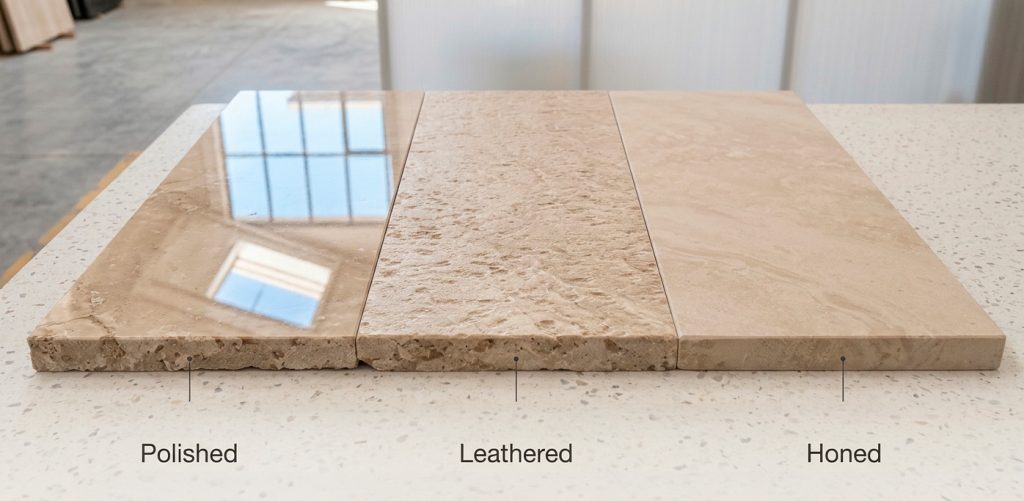
| Finish | Texture | Typical stones | Best uses | Indoor / outdoor |
|---|---|---|---|---|
| Natural cleft | Irregular, riven | Slate, quartzite | Cladding, roofing, paving | Both |
| Split face | Rough, chunky relief | Slate, quartzite, granite, sandstone | Walls, façades, feature walls | Both |
| Mushroom | Raised, rustic relief | Quartzite, granite, sandstone | Façades, garden walls | Mostly outdoor |
| Polished | Glossy, smooth | Granite, marble, quartzite | Countertops, interior floors and walls | Indoor |
| Honed | Matte, smooth | Marble, limestone, granite | Floors, bathrooms, countertops | Mainly indoor |
| Leathered | Soft, slightly undulating | Granite, marble, quartzite | Countertops, vanity tops | Indoor |
| Flamed | Rough, crystalline | Granite, some quartzites | Paving, steps, pool surrounds | Outdoor |
| Bush-hammered | Uniform small craters | Granite, limestone, sandstone | High-traffic paving, public spaces | Outdoor |
| Sandblasted | Fine, grainy | Granite, limestone, sandstone | Paving, terraces, walls | Both |
| Sawn | Matte, fine furrows | Granite, limestone | Paving, driveways, steps | Outdoor |
| Tumbled | Soft, worn edges | Limestone, marble, travertine | Rustic floors, patios, pool decks | Both |
| Aged | Soft, antique look | Limestone, marble | Period and rustic interiors | Mainly indoor |
Natural

A natural finish is the absence of any surface treatment: the stone is supplied as extracted from the quarry, once cut into the desired format. Its final appearance depends entirely on the characteristics of each stone and on how it has been quarried, which makes it the most authentic way of presenting natural stone.
- How it’s made: the stone is only cut to size, with no further treatment of the surface.
- Best for: cladding and cobblestones.
- Keep in mind: because the surface is not modified, texture and appearance can vary considerably from one stone to another.
Mushroom

The mushroom finish is achieved using traditional masonry tools to chip the stone with controlled blows. This creates a surface with raised, irregular relief that resembles the natural contours of rock formations, giving the stone a highly textured, rustic appearance.
- How it’s made: by hand, with controlled blows of masonry tools.
- Best for: exterior walls, façades and decorative cladding in traditional or rustic designs.
- Works with: quartzite, granite and sandstone.
Polished
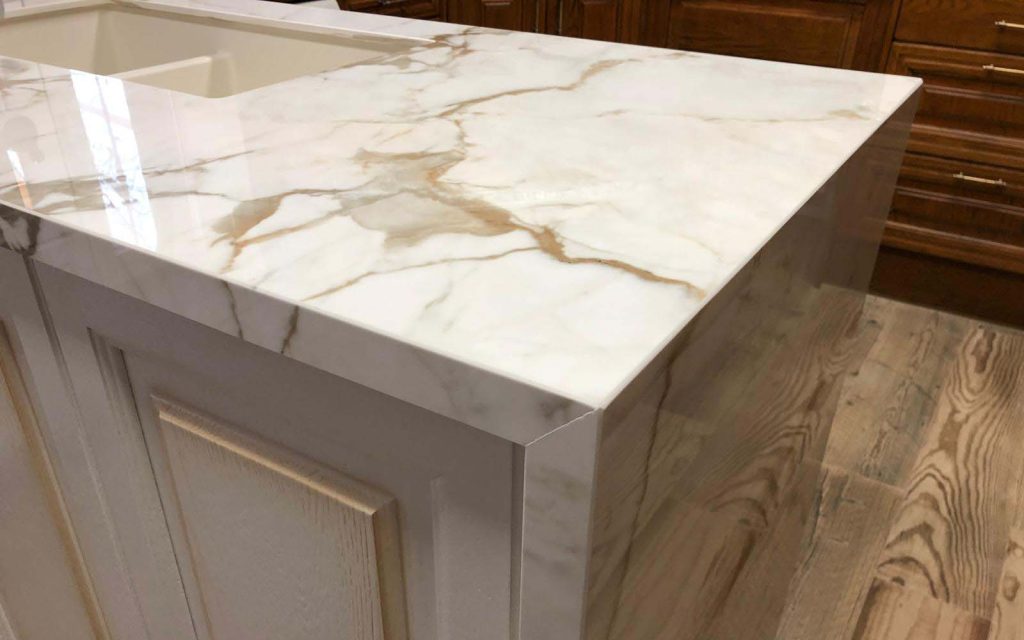
Polished natural stone finish, highlighting its smooth, glossy surface and elegant appearance.
A polished finish is a glossy, mirror-like surface obtained by the repeated application of progressively finer abrasives. Polishing enhances colour and veining and closes the surface, making it less porous.
- Best for: kitchen countertops, bathroom vanities, interior floors and walls.
- Works with: granite, marble and quartzite; softer stones lose their shine more quickly.
- Keep in mind: polished stone is slippery when wet, so it is not recommended for outdoor paving or wet areas.
Honed
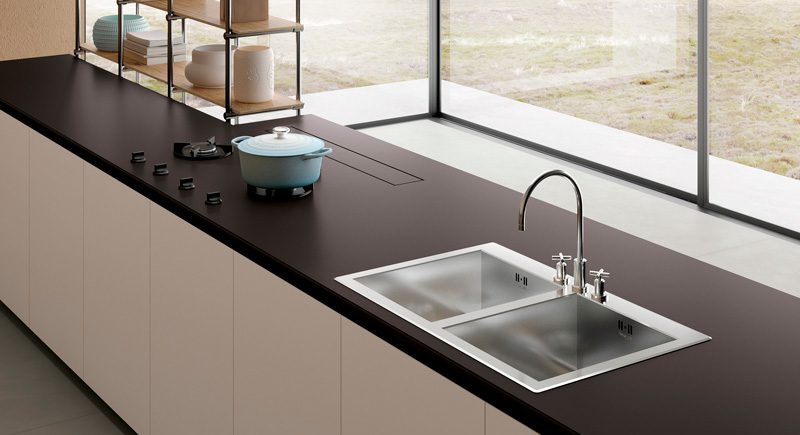
A honed finish is a smooth, matte surface produced by the same abrasive process as polishing, stopped before the stone reaches a gloss. The result is soft to the touch, reflects less light and shows scratches less than a polished finish.
- Best for: floors, bathrooms, countertops and contemporary interiors.
- Works with: marble, limestone, granite and most dense stones.
- Keep in mind: a honed surface is slightly more open than a polished one, so sealing is often recommended for porous stones.
Leathered
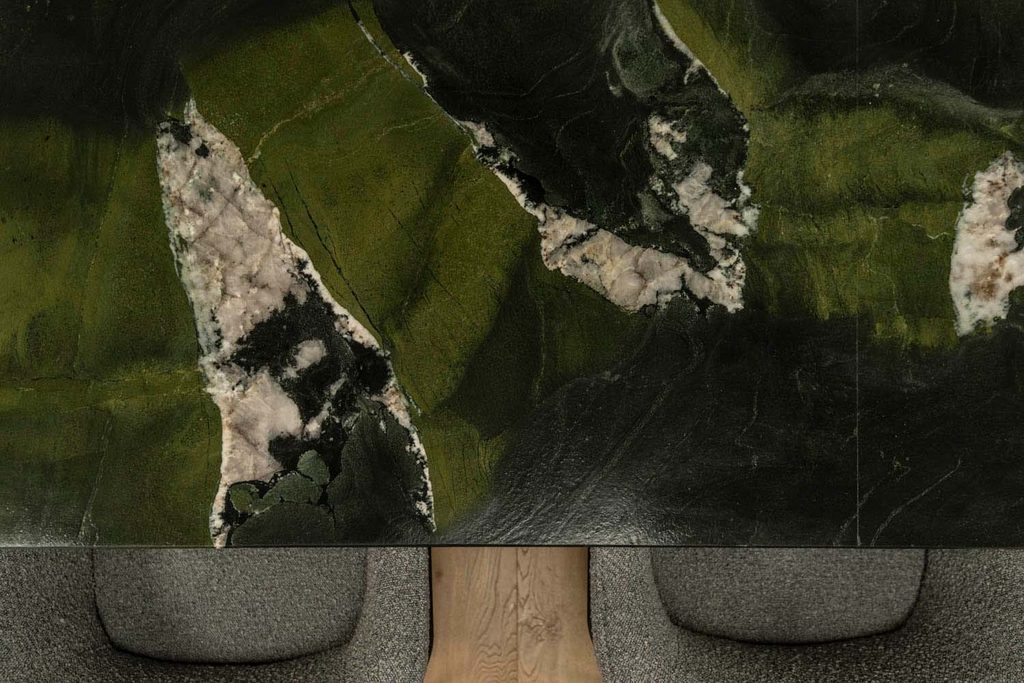
A leathered finish is obtained by brushing the slab with a range of brushes, giving a slightly undulating surface that is very soft, warm and smooth to the touch. It combines the smoothness of a honed finish with more texture and character.
- Best for: kitchen countertops and vanity tops.
- Works with: only a few materials are supplied with this finish, mainly granite.
- Keep in mind: the texture helps disguise fingerprints and everyday wear.
Flamed
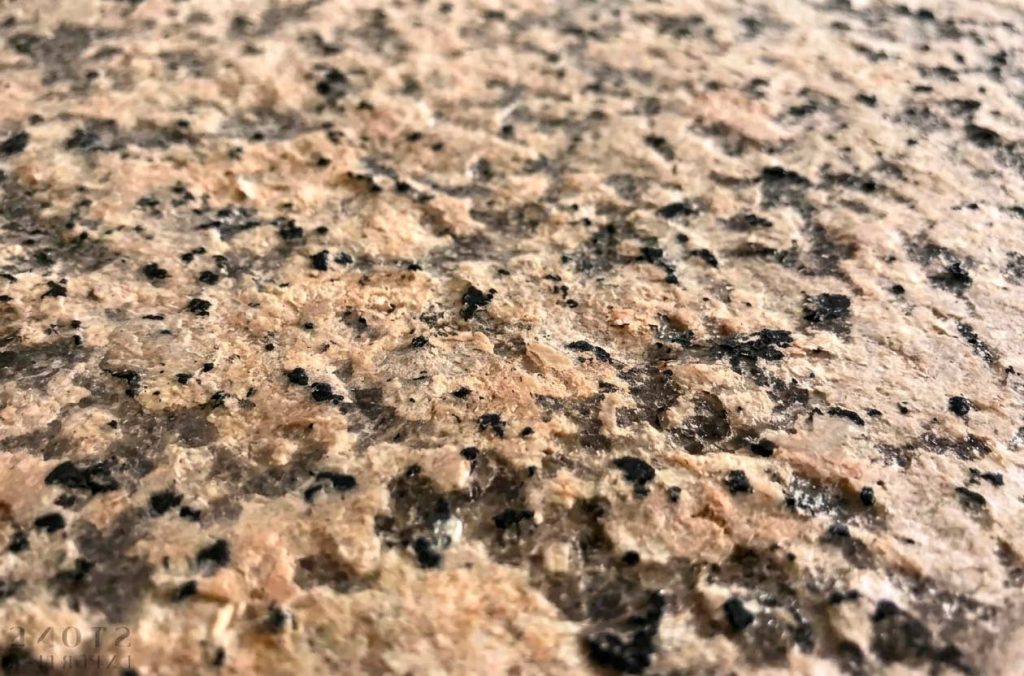
A flamed finish is achieved by exposing the stone surface directly to a high-temperature flame, which causes the crystals to burst and leaves a rough, slip-resistant texture. It is one of the most widely used finishes for outdoor granite.
- Best for: outdoor paving, steps, pool surrounds and public spaces.
- Works with: granite and some quartzites; it is not suitable for marble or limestone.
- Keep in mind: flaming slightly lightens the colour of the stone.
You can see how this process is carried out at our granite factory, Ramilo, in this video:
Bush-hammered
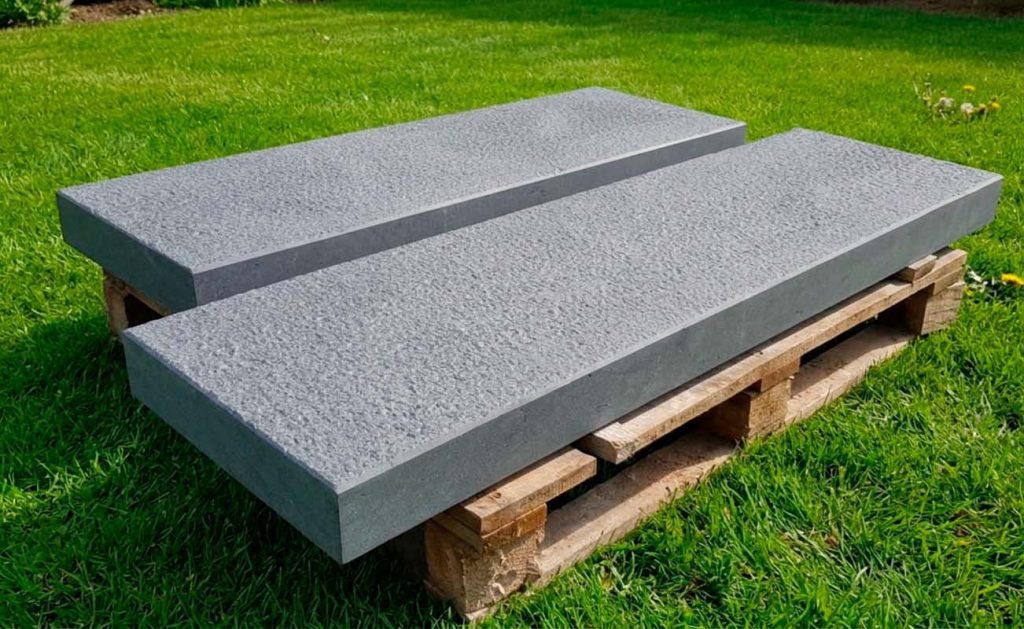
A bush-hammered finish is produced by striking the surface, manually or mechanically, with a masonry tool called a bush hammer. It creates uniformly distributed craters of varying sizes that make the surface highly slip resistant.
- Best for: high-traffic exterior areas, public paving, ramps and stairs.
- Works with: granite, limestone and sandstone.
Sandblasted
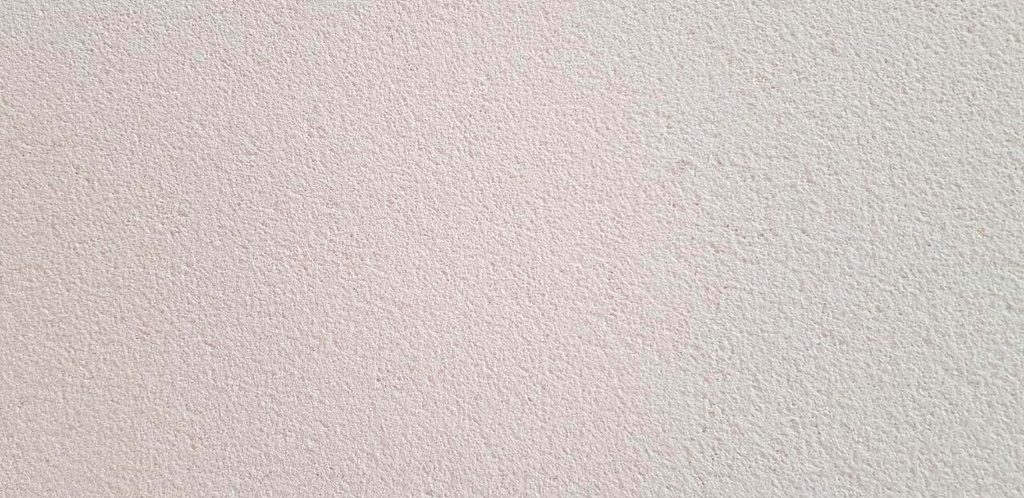
A sandblasted finish is created by repeatedly blasting abrasive particles against the stone with an air gun, producing very small craters and a fine, grainy texture. It is subtler than bush-hammering and highlights the colour of the stone.
- Best for: terraces, paving, walls and surfaces where a soft but non-slip texture is needed.
- Works with: granite, limestone and sandstone.
Sawn

A sawn finish is created by cutting the stone with diamond discs, resulting in a slightly rough and irregular surface with small furrows and undulations. It gives the stone a lighter, matte appearance and natural grip.
- Best for: external paving, steps, pathways, driveways and patios.
- Works with: granite and limestone.
Tumbled
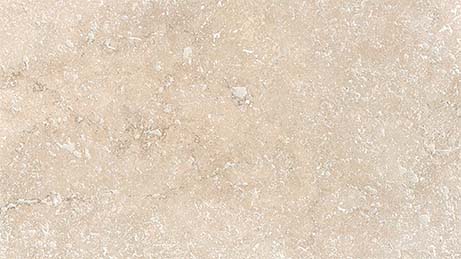
A tumbled finish is obtained by placing the stone in a vibrating drum-like machine with smaller, more resistant stones that wear down the whole piece. It simulates ageing and produces soft surfaces and rounded edges.
- Best for: rustic floors, patios, pool decks and backsplashes.
- Works with: limestone, marble and travertine; only sufficiently tough stones withstand the process.
Aged
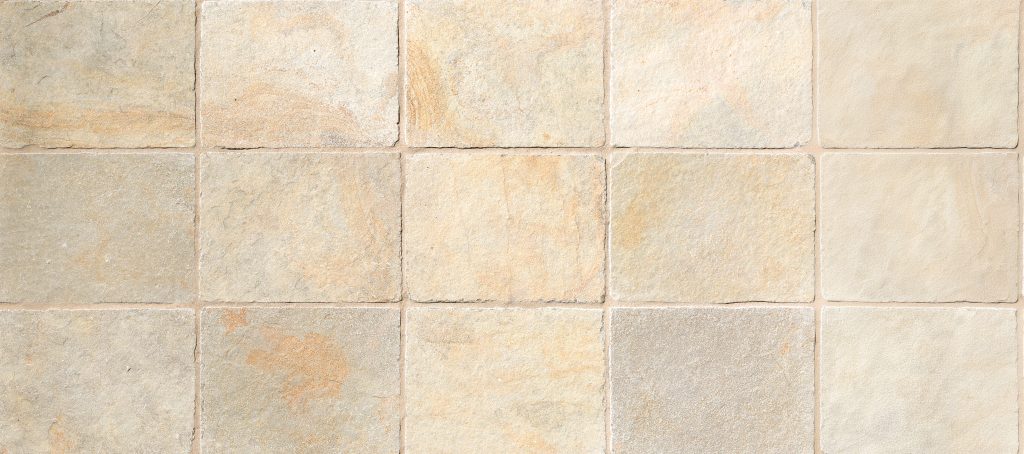
An aged finish is characterised by the use of constant vibration on the stone surface to simulate the natural wear of old stone. Different methods can be used to achieve it, but all of them generate soft surfaces.
- Best for: period homes, restorations and rustic interiors.
- Works with: limestone and marble.
Best stone finishes for walls and cladding
For natural stone walls, the finish determines how much texture and shadow the wall will have. Natural finishes are the usual choice for façades and feature walls because they show the stone exactly as it comes from the quarry, while mushroom finishes suit traditional and rustic architecture. For interior walls with a cleaner look, honed or polished stone works best.
For textured walls, the most practical option is usually a natural stone panel system rather than individual pieces. Stonepanel, Cupa Stone’s natural stone cladding panel, offers natural stone in ready-to-install panels, and it can also be integrated into an external thermal insulation system for façades.
How to choose the right natural stone finish
Start with the location. For outdoor paving, pool surrounds and any surface that can get wet, choose a textured finish such as flamed, bush-hammered, sandblasted or sawn. For interior floors, honed is usually the safest balance between looks and grip. For countertops, polished and leathered finishes are the most practical (see our guide to the best granites for kitchen countertops).
Then check that the finish is compatible with the stone. Flaming, for example, only works on stones rich in quartz and feldspar such as granite, while tumbling requires a tough material.
inally, ask for technical data. Slip resistance of natural stone is measured with the pendulum test defined in EN 14231, and the result varies with both the stone and the finish. You can ask our technical sales team for this data and the full technical information of each product.
Frequently asked questions
Need help choosing a finish for your project? Contact our technical team.
Can you use polished stone outdoors?
Polished stone is not recommended for outdoor paving or wet areas because it becomes slippery. It can, however, be used on vertical outdoor surfaces such as cladding, where slip resistance is not a concern.
What is the most slip-resistant natural stone finish?
Flamed, bush-hammered and sandblasted finishes generally offer the highest slip resistance. The exact value depends on the stone, so check the EN 14231 pendulum test result in the product’s technical data sheet.
Which stone finish is best around a swimming pool?
Textured finishes such as flamed, sandblasted or tumbled are the best choice for pool surrounds because they provide grip when wet. Learn more in our guide to natural stone swimming pools.
What is the difference between polished and honed stone?
Both are smooth, but polished stone is glossy and reflects light, while honed stone is matte. Honed stone shows scratches less and is less slippery, while polished stone highlights colour and veining more.
Can a stone finish be changed after installation?
Some can. A worn polished surface can be re-polished, and a polished surface can be honed by a professional. Turning a textured finish into a smooth one, or vice versa, is more difficult and usually requires significant grinding or retreatment on site.
Do different finishes need different maintenance?
Yes. Textured finishes can retain more dirt and may need more thorough cleaning, while honed and some polished stones benefit from periodic sealing, depending on the porosity of the stone.
Share article


